

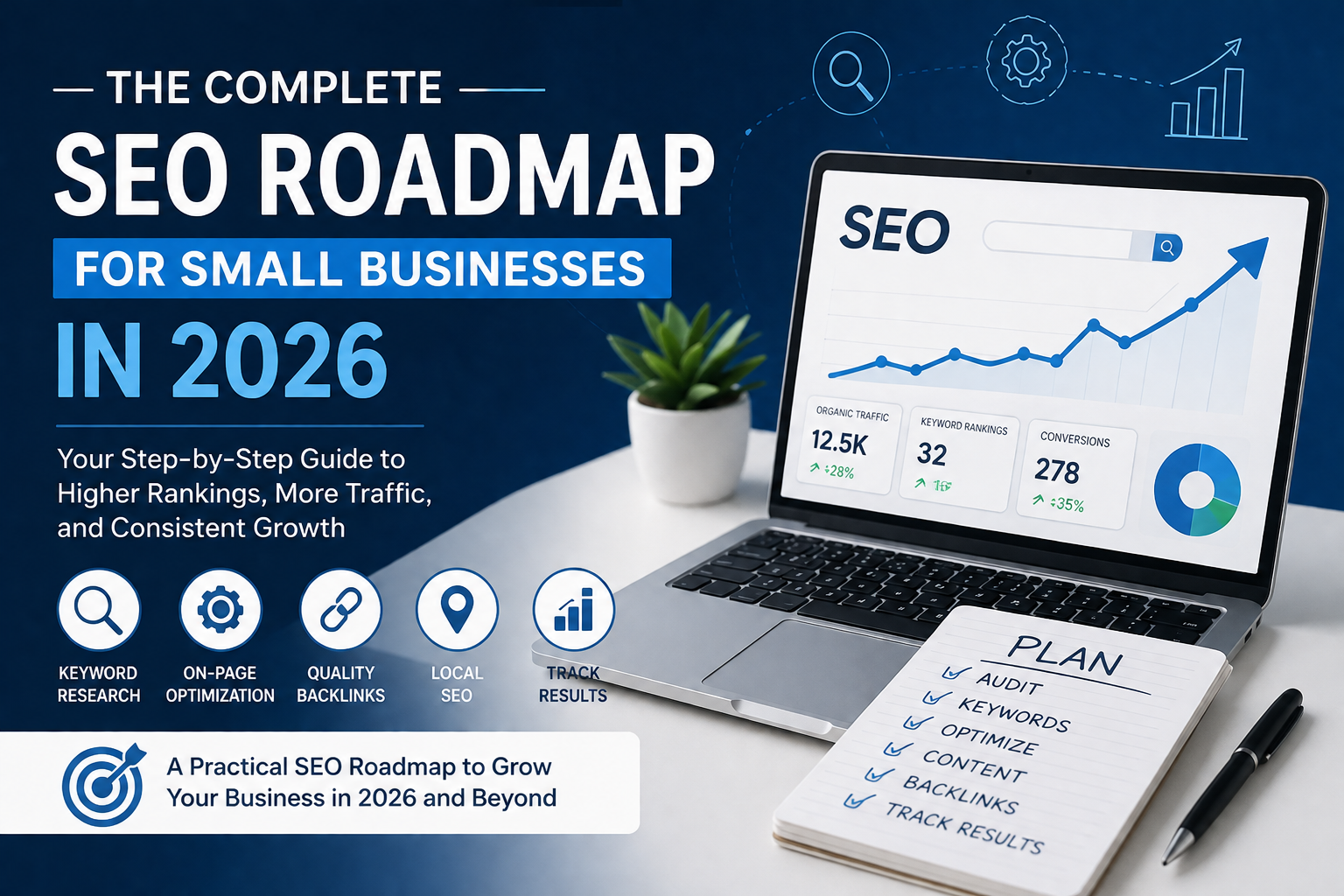
Search Engine Optimization (SEO) remains one of the most powerful ways for small businesses to generate consistent leads and sales without relying entirely on paid advertising.
As search algorithms continue to evolve, businesses that implement a structured SEO strategy gain a significant competitive advantage. The challenge is that many business owners don’t know where to start or which SEO activities actually drive results.
This guide outlines a practical SEO roadmap for 2026 that helps small businesses increase visibility, attract qualified prospects, and build sustainable growth.
Why SEO Still Matters in 2026
Consumers continue to use search engines when researching products, services, and solutions. Whether they’re searching for a local service provider, comparing options, or looking for answers, businesses that appear prominently in search results receive more attention and more opportunities.
Benefits of SEO include:
- Increased website traffic
- Higher-quality leads
- Greater brand authority
- Better customer trust
- Lower long-term customer acquisition costs
- Sustainable growth over time
Unlike paid ads, SEO continues delivering value long after content is published and optimized.
Step 1: Conduct a Comprehensive SEO Audit
Before making improvements, understand your website’s current performance.
An SEO audit helps identify:
- Technical issues
- Broken links
- Slow-loading pages
- Duplicate content
- Missing metadata
- Mobile usability problems
- Indexing issues
Questions to ask:
- Is your website mobile-friendly?
- How fast does your website load?
- Are pages properly indexed?
- Are there any crawl errors?
- Is your site secure with HTTPS?
Addressing these foundational issues creates a stronger platform for future growth.
Step 2: Understand Search Intent
One of the biggest SEO mistakes is targeting keywords without understanding what users actually want.
Search intent generally falls into four categories:
Informational
Users are seeking information.
Examples:
- What is SEO?
- How does email marketing work?
Navigational
Users are looking for a specific website.
Examples:
- HubSpot login
- Shopify website
Commercial
Users are researching before purchasing.
Examples:
- Best CRM software
- Top SEO agencies
Transactional
Users are ready to buy.
Examples:
- Hire SEO consultant
- SEO services near me
Understanding intent helps create content that matches user expectations.
Step 3: Build a Keyword Research Strategy
Keyword research is the foundation of successful SEO.
Focus on:
Primary Keywords
Main search terms directly related to your services.
Examples:
- SEO services
- Digital marketing agency
- Sales funnel optimization
Long-Tail Keywords
More specific phrases that often convert better.
Examples:
- SEO roadmap for small business
- How to improve website speed
- Email marketing for local businesses
Local Keywords
Critical for service-based businesses.
Examples:
- SEO consultant in Dallas
- Digital marketing agency near me
Use keyword research tools to identify:
- Search volume
- Competition levels
- Search intent
- Keyword opportunities
Step 4: Optimize Website Structure
A well-organized website improves both user experience and search engine crawling.
Recommended structure:
Home
├── Services
│ ├── SEO Services
│ ├── Social Ads
│ ├── Sales Funnels
│ ├── Email Marketing
│ └── Content Marketing
├── Blog
├── About
└── Contact
Each service should have its own optimized page targeting specific keywords.
Step 5: Improve Website Speed
Website speed directly impacts rankings, user experience, and conversions.
Research consistently shows that slow-loading websites experience:
- Higher bounce rates
- Lower engagement
- Reduced conversions
Speed optimization tactics:
- Compress images
- Use caching
- Minimize plugins
- Enable CDN services
- Optimize code and scripts
- Upgrade hosting when necessary
Even a one-second improvement can significantly impact conversion rates.
Step 6: Create High-Quality Content
Content remains one of the strongest ranking factors.
Businesses should focus on creating:
Educational Content
- Guides
- Tutorials
- Industry insights
Commercial Content
- Service comparisons
- Product reviews
- Case studies
Problem-Solving Content
- Common customer questions
- FAQs
- Troubleshooting guides
Content should provide genuine value while naturally incorporating relevant keywords.
Step 7: Optimize On-Page SEO
Every page should include:
Title Tags
Clear, keyword-focused titles.
Example:
Complete SEO Roadmap for Small Businesses in 2026
Meta Descriptions
Compelling summaries encouraging clicks.
Header Structure
Use:
- H1
- H2
- H3
to organize content clearly.
Internal Links
Connect related pages and blog posts.
Image Optimization
Include:
- Descriptive filenames
- Alt text
- Proper compression
These elements help search engines understand page content.
Step 8: Build Authority Through Backlinks
Backlinks remain a major ranking factor.
Quality backlinks signal trust and authority.
Effective methods include:
Guest Posting
Publish content on relevant industry websites.
Digital PR
Share insights and expert commentary.
Local Citations
List your business on:
- Google Business Profile
- Yelp
- Industry directories
Link-Worthy Content
Create valuable resources others naturally reference.
Focus on quality rather than quantity.
Step 9: Strengthen Local SEO
For local businesses, local SEO is often the fastest path to leads.
Key actions:
Optimize Google Business Profile
Include:
- Accurate business information
- Services
- Photos
- Reviews
Generate Reviews
Positive reviews improve visibility and trust.
Create Local Landing Pages
Target specific cities and service areas.
Build Local Citations
Maintain consistent business information across directories.
Step 10: Track Performance and Improve Continuously
SEO is not a one-time project.
Monitor:
- Organic traffic
- Keyword rankings
- Click-through rates
- Conversions
- Bounce rates
- Lead generation
Regular analysis helps identify:
- What’s working
- What needs improvement
- New opportunities
Businesses that continuously optimize outperform competitors over time.

 +234 705 022 9352
  uprisedigitalworld01@gmail.com